The Most Stable Currency in History: A Coin That Never Changed for 500 Years
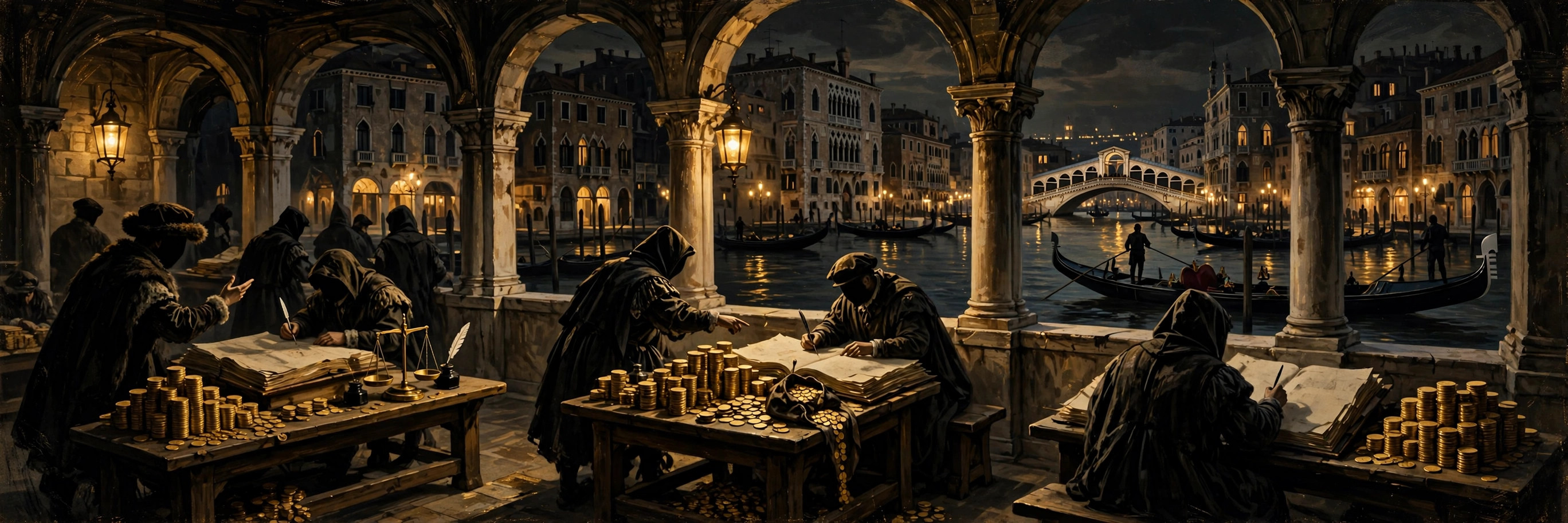
Ask which was the most stable currency in history, and the honest answer is a gold coin struck in Venice in 1284. In 1284 Venice struck a gold coin — the ducato, called the zecchino from the sixteenth century after the Zecca, the mint that made it. Then the Republic did the hardest thing in monetary history: nothing. For over five hundred years, until the last doge in 1797, the zecchino's design and fineness were maintained — while the money of every rival rotted around it. This is the coin Module 7's currency law pointed toward: the name on the coin, backed by metal that never changed.
The coin was first issued in 1284 under Doge Giovanni Dandolo — about three and a half grams of gold (a British Museum specimen of Dandolo's issue weighs 3.540 grams), the doge kneeling before St Mark on one face, Christ in a mandorla on the other. With Florence's florin it became one of the two “dollars of the Middle Ages”: accepted across the Mediterranean, trusted by merchants who never saw Venice, and even exempted from other states' bans on foreign coin — because no one had to assay it. Everyone already knew what was in it.
Now the precision this course owes you. Fineness figures for the ducat vary by source and specimen — .986 to .999 in the retellings — so the defensible statement is: near-pure gold, with the fineness maintained. The historian Alan Stahl puts it exactly: the coinage was stable in fineness, “if not always in weight (from the 16th century).” And be honest about the rest of the system: Venice did debase its silver and petty coinage over the centuries, and its money of account drifted against the ducat. The five-hundred-year stability claim belongs to the gold zecchino alone — which is precisely why it is remarkable.
The standard was guarded by law. Counterfeiting was an offense against the Doge and the state, and Stahl documents the penalties for clipping and counterfeiting the coinage in the early fourteenth century: loss of the right hand and the right eye, and banishment; by 1359, both eyes, the right hand, banishment, and a fine of 1,000 lire for men. Set beside it the contrast from Lesson 7.8: the Ottoman akçe lost 44 percent of its silver in the single debasement of 1585–86, fell from 0.68 grams in 1584 to 0.23 grams by 1689, and was devalued 100 percent against the Venetian ducat. Contemporaries priced decay against the ducat — the ducat was the benchmark because it did not move.
The full module — 7 lessons, free
This preview is Lesson 8.3 of Module 8: The Bankers of Venice, the second expansion module of L.A.W. — Land · Air · Water, the free study course on the three jurisdictions and where they came from. All seven lessons:
- 8.1 — The Bench at the Rialto
- 8.2 — The Funded Debt
- 8.3 — The Coin That Never Changed
- 8.4 — Paper That Moved the World
- 8.5 — Courts for Merchants
- 8.6 — The Ghetto Bargain
- 8.7 — Collapse and Blueprint
The #1 Source for Information for Freemen in America — Take Your Power Back.
Educational only, not legal advice — if you don't have the knowledge of a lawyer, consult a lawyer. Void where prohibited by law.
Written by human, assisted by AI.